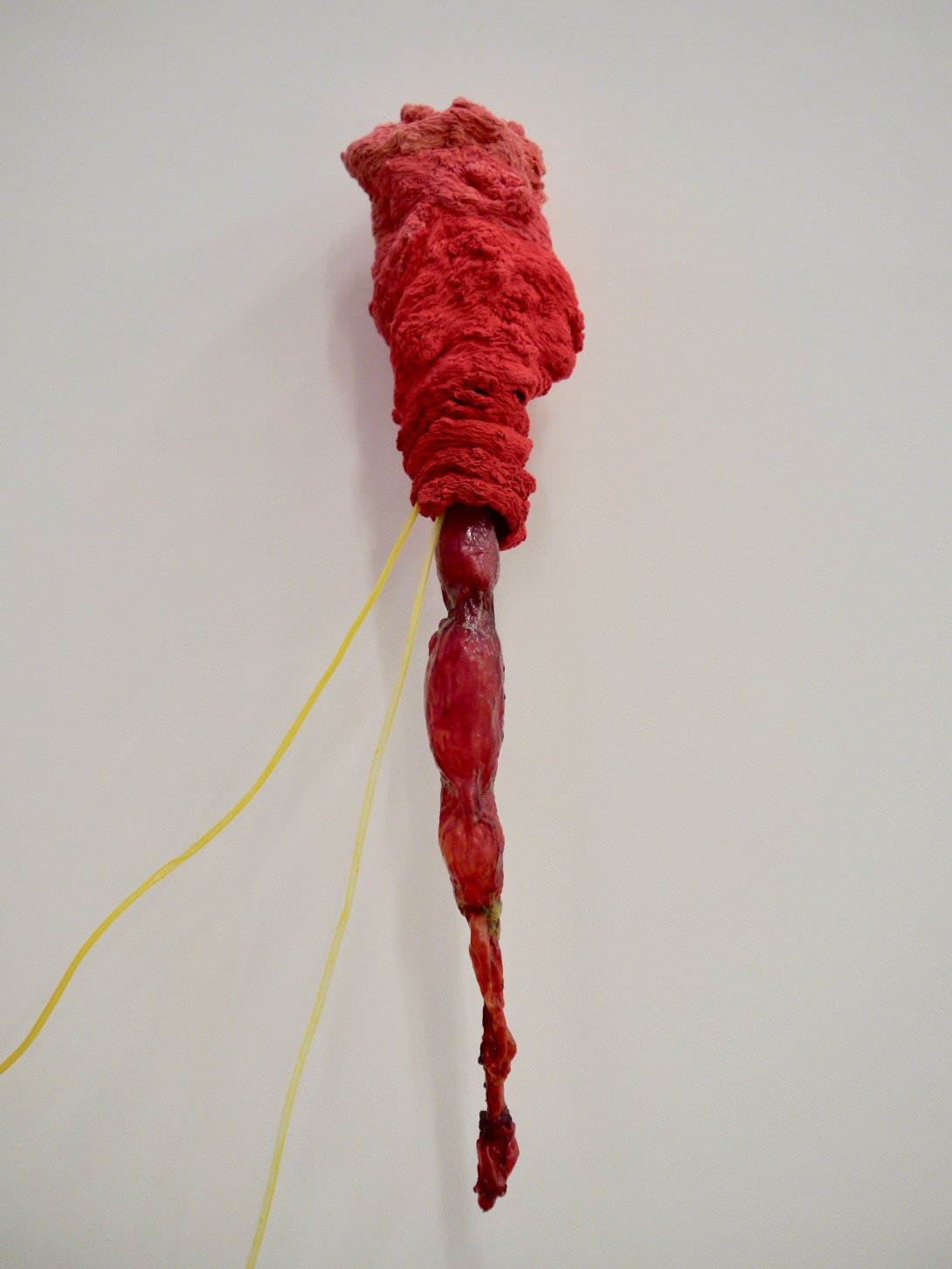
Matt Gale’s work examines systems and relationships, exploring unusual or unexpected pairings of partners as a means to reference the queerness of the natural world – that actually nature is far less binary than we might imagine.
I stand in cold stacks. My hands run over the pale green boxes scored with pencil marks. I rummage. A syllabus, a letter and tangled endings. An under-stairs cupboard filled with pornography. S&M dyke night flyers with tea in the living room. Email trails: reaching out, and toward something…
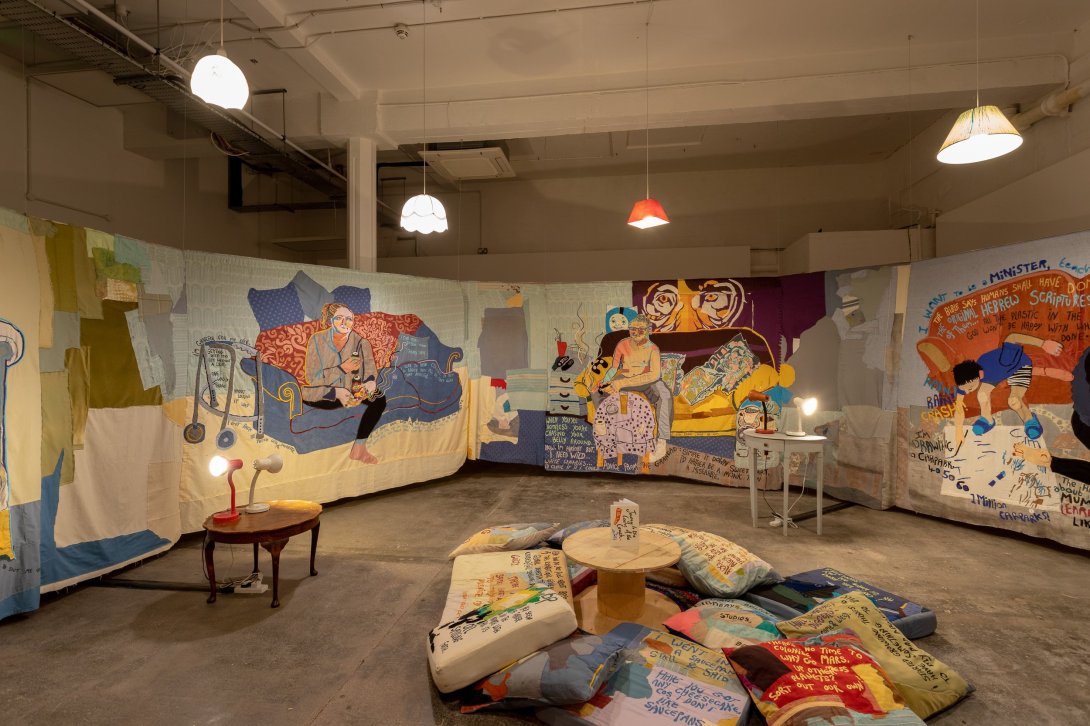
Hull-based artist Ella Dorton’s fabric portraits creatively capture the unique spirit of the city’s residents, giving a voice to those who have been left behind by society…
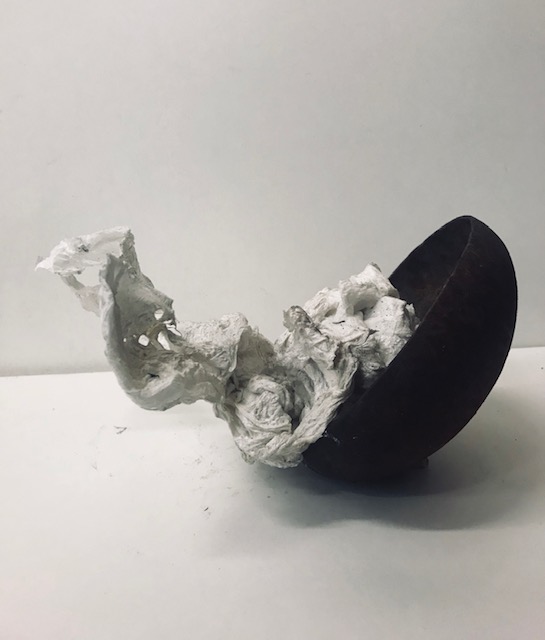
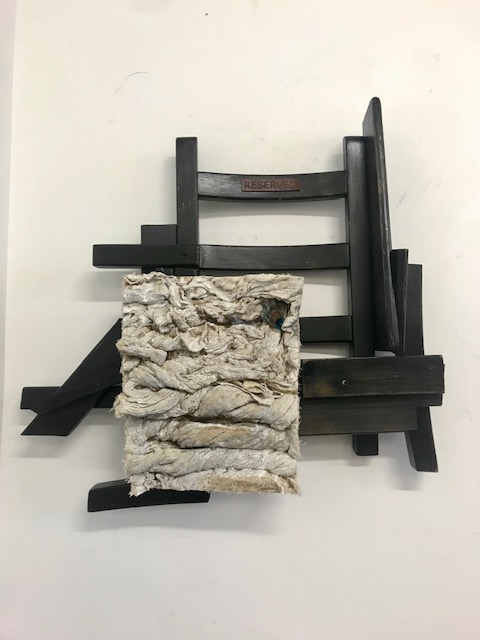
Our spotlight this month is the mixed-media artist Blandine Martin. Martin works with materials including sand, recycled paper and timber to combine the organic with the abstract. Looking at objects and their place within the domestic sphere, Martin questions and transforms everyday objects, their assumed function and associated rituals, particularly rituals involving women. Objets sans importance explores the weight and lasting legacy of female history, and how society has objectified women.
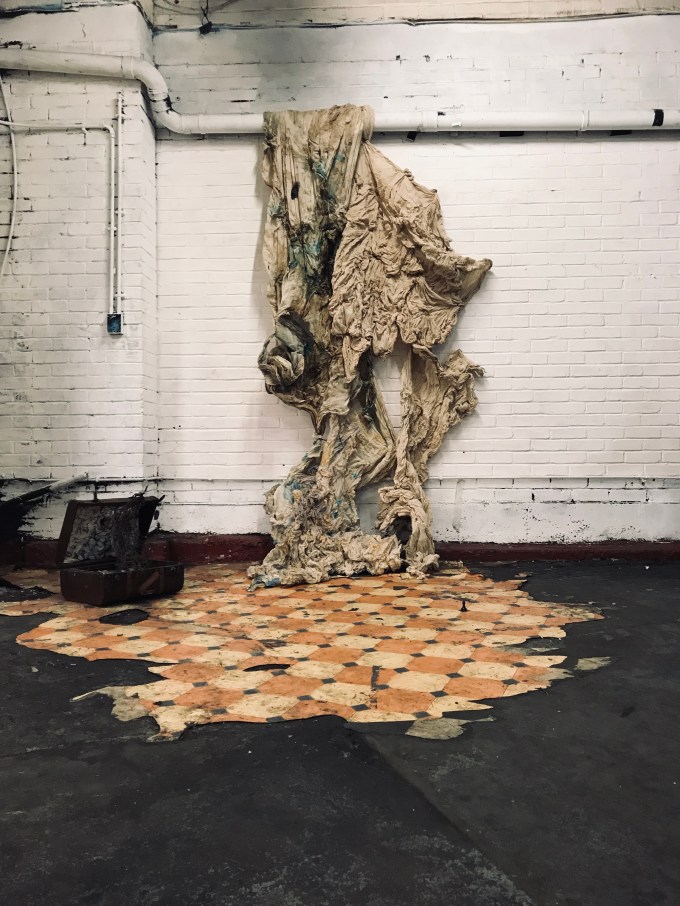
Passengers Installation at the ugly duck gallery, 2019. Textiles and suitcase.
Bud, 2019. Metal fork with orange felt.
“Blandine plays with conceptual ideas and the art of dismantling objects and their purpose along with their narrative”
OBJECTS TO COMPARE. 2009. Iron details, cotton. Cross stitch, drilling
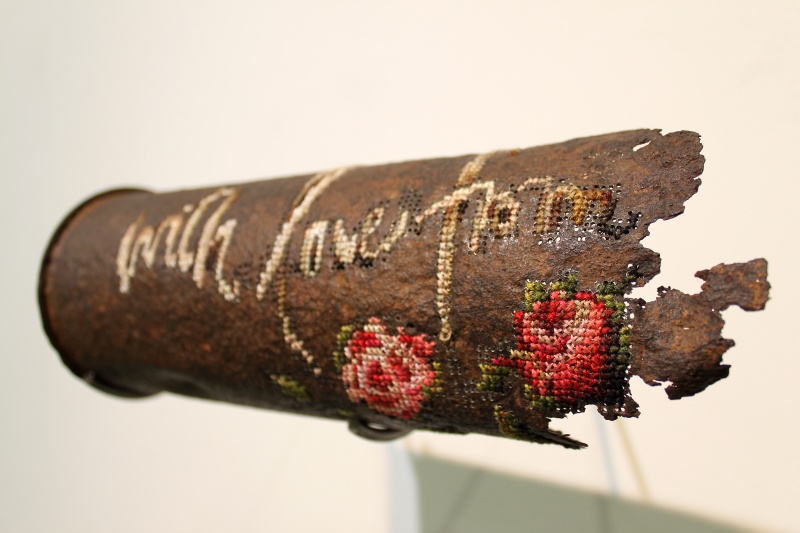
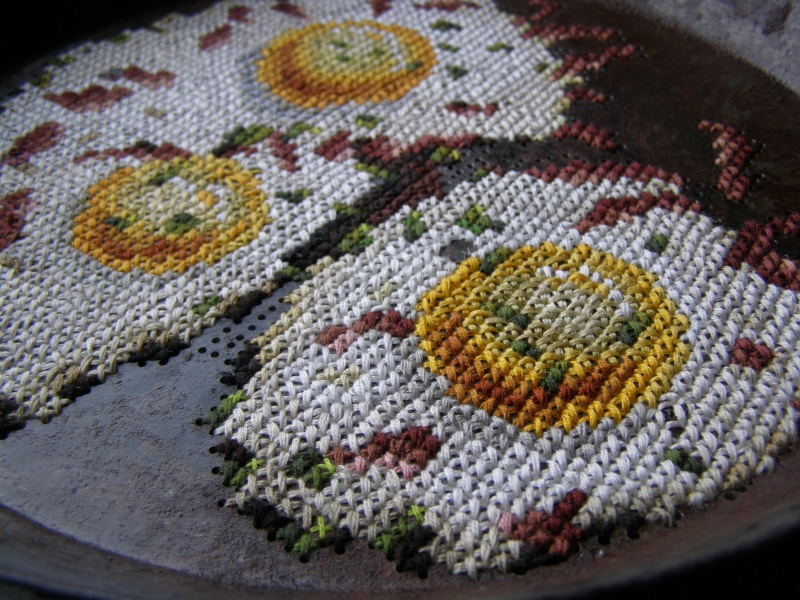
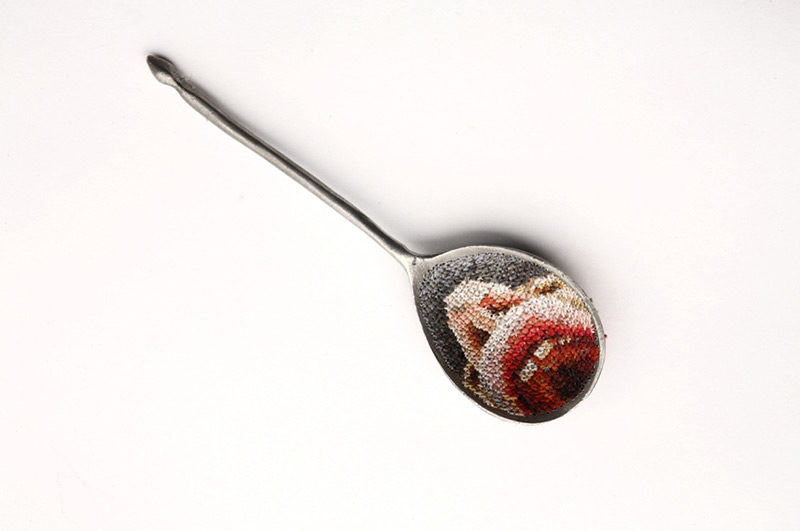
The embroidery works of Lithuanian artist Severija Inčirauskaitė-Kriaunevičienė takes texture to a new level. She takes metal as her starting point – buckets, spades, even cars – and stitches into them. Challenging the domestic association with embroidery, these found objects are placed into the public realm. The kitsch cosiness that Inčirauskaitė-Kriaunevičienė associates with cross-stitching is given a twist as she pokes through metal gives new life to discarded objects. She draws on a post-Soviet landscape in Lithuania in her work, as she writes on her website “in the postwar years, our grandmothers stitched tablecloths in the villages, and the paths were so decorated, and in the Soviet era, our mothers made crossed cushions and napkins through household lessons”. This intergenerational skill-sharing is then developed in her practice, to question sentimentality and access to embroidery practices. She doesn’t want to make “private kitsch for private interiors” but rather expose the work, patience and mindfulness that goes into the cross-stitch practice. Taking the floral designs from hobby magazines, these “popular culture citations” make us look back at the origins of the techniques. These established traditions recontextualise the objects they adorn – whether that’s on broken gun shells or metal spoons. Imbued with new use, these forgotten objects might tap into a nostalgic aesthetic but actually point us towards history in a new way.
WITH LOVE FROM…”. 2018. WWII FlaK anti-aircraft gun shell. Cross stitch embroidery, drilling. WITH LOVE FROM…”. 2018. Detail
Every Stick Has Two Ends, 2012. Shovel parts, wood, cotton. Cross-stitch, drilling.
MORNING TRIO. 2014. Metal pan, cotton. Cross-stitch, drilling.
MORNING TRIO. 2014. Detail
Greed, 2012. Metal spoon, cotton, Cross stitch, drilling.
After Party, 2013. Tin can, cotton. Cross-stitch, drilling.
Between City and Country, 2009. Metal bucket, watering can, milk can. Cross-stitch, drilling.
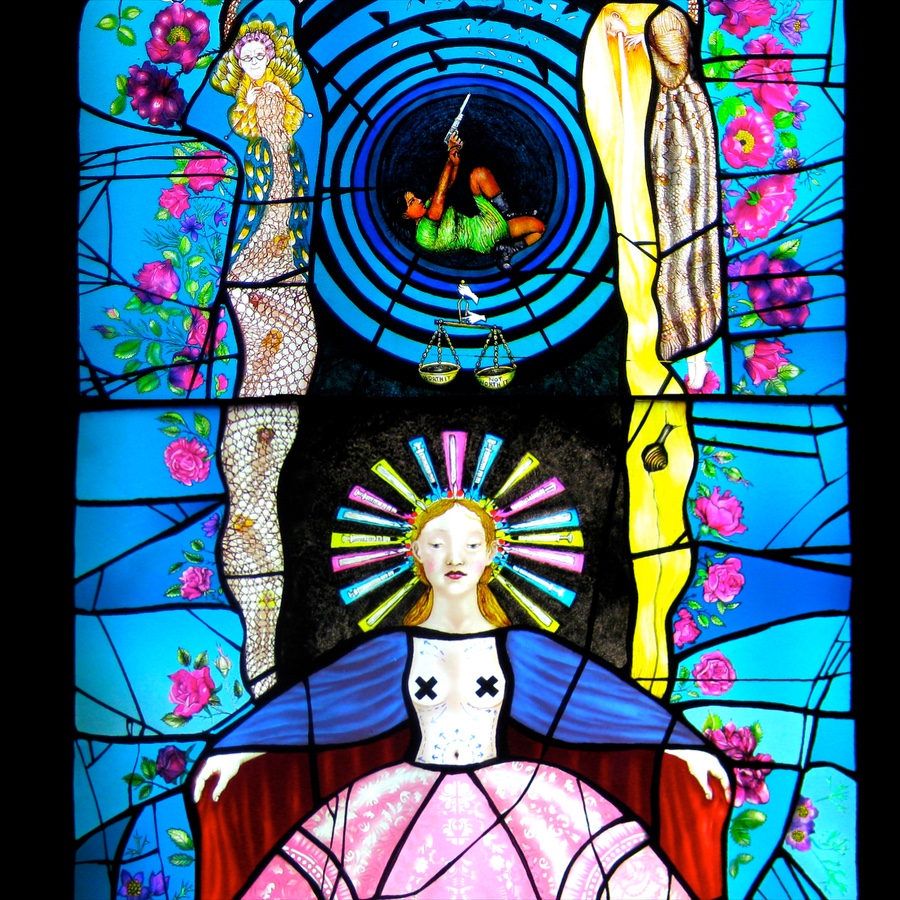
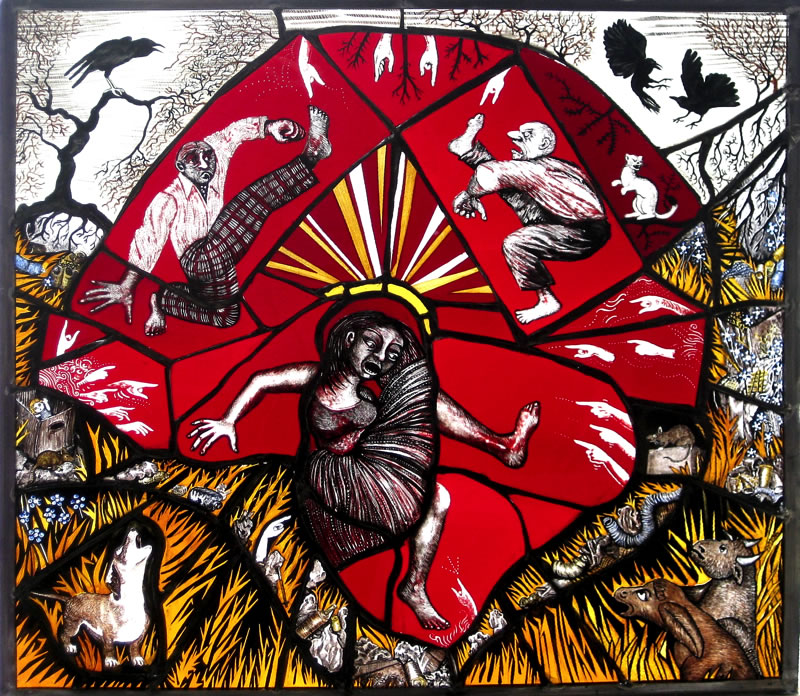
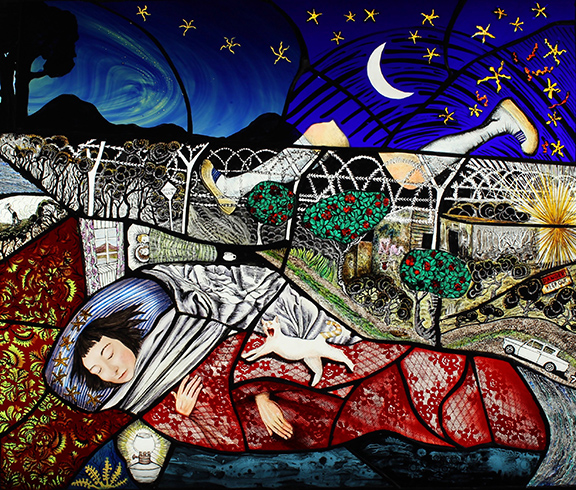
Pinkie Maclure is an artist using the allegorical power of medieval stained glass as a vehicle for contemporary expression. Stained glass was invented in the 12th century to communicate to a largely illiterate population, its vivid colours having a seductive quality that’s hard to resist. However, its narrative role has been largely abandoned in recent years, which is something she hopes to change by making work that reflects the world around us today.
Artist Statement: On ‘Beauty Tricks’
“My goal is to seduce the eye, but crucially, to deal with contemporary subject matter, telling darkly humorous stories from modern life. When I started work on ‘Beauty Tricks’ I wanted to make something beautiful. This led me to question interpretations of beauty and immediately a multitude of thorny contradictions popped up.
I decided to explore the way the beauty industry affects us and our environment. The central figure is based around a classic madonna, but she has liposuction lines on her torso and hypodermic needles and scalpels adorning her halo. Her nipples have been censored. Two little girls gaze up at her beautiful pink frock from a grey world of abandoned plastic containers. Above her, medieval scales traditionally used to symbolise the ‘weighing of souls’ refer to the long-running L’Oreal ad ‘worth it, not worth it’. A woman fires a gun at a mirror, smashing it to smithereens. To her left, a ‘kindly’ grandmother knits a web of Barbie dolls and to her right is a bulimic Rapunzel. The palm trees refer to the palm oil industry, the roses symbolise feminine beauty. At the top, Satan is hopping across the towers of Oxbridge with a pile of books heaped on his back, stealing all the knowledge while the women are distracted”
Other work:
‘Landfill Tantrum’ (2013)Self-portrait Dreaming of Portavadie (2019)‘The Storm’ (2017)‘Stop Go.’ (2015)Rewilding at the Clootie Tree (2016)
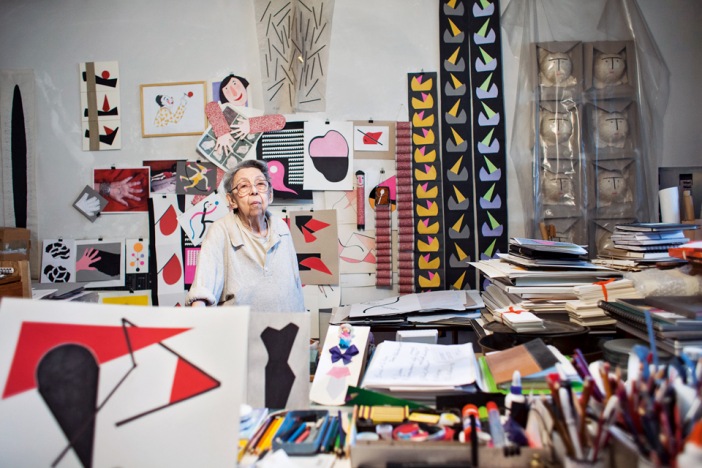
At the 2017 Venice Biennale’s Romanian Pavilion, Geta Brătescu’s exhibition ‘Apparitions’ cemented her status as a rising star on the international art scene. Aged ninety-one, Brâtescu was something of an unusual art world darling, yet she was well-known in her native Romania for a rich, multidisciplinary body of work that she would develop up until her death in September 2018.












 decoratingdissidence.com