

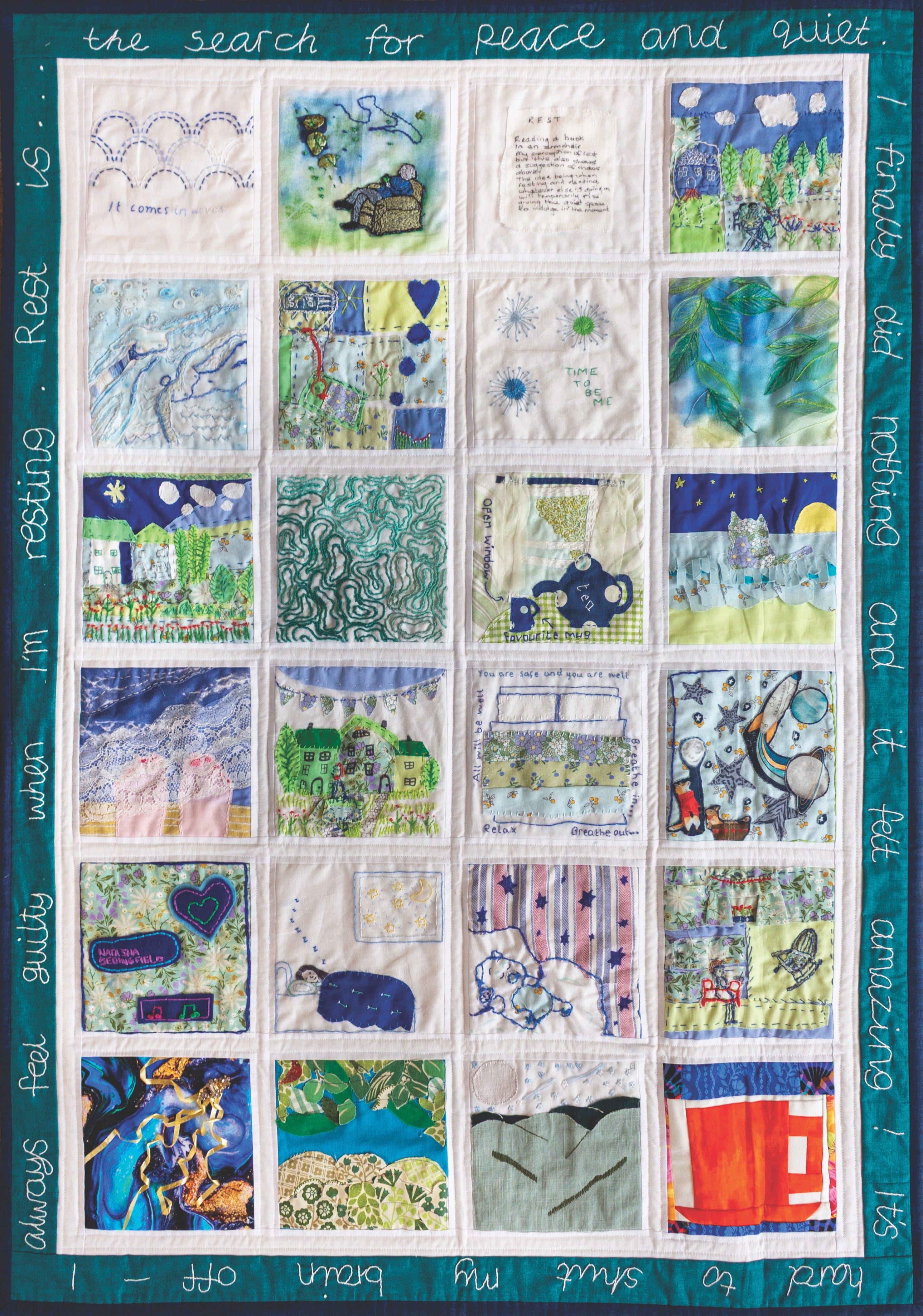
This September, The Women’s Art Collection opens a new exhibition: The Sleepers. Exploring the politics of rest, the collection brings together a century of works across a variety of mediums: paintings, prints and textiles. At the heart of the exhibition is a collaborative quilt, created with women from the Cambridge Women’s Resource Centre and artist Cait Moreton-Lisle, which stitches together themes of rest, resistance, and care. Below, we go behind the scenes of quiltmaking with assistant curator Laura Moseley (who also champions craft as the founder of Common Threads Press) to talk about how the quilt is both a physical symbol of comfort and a platform for collective creativity…
Behind the Scenes: The Sleepers Quilt
Why was quilting chosen as the medium for this project?
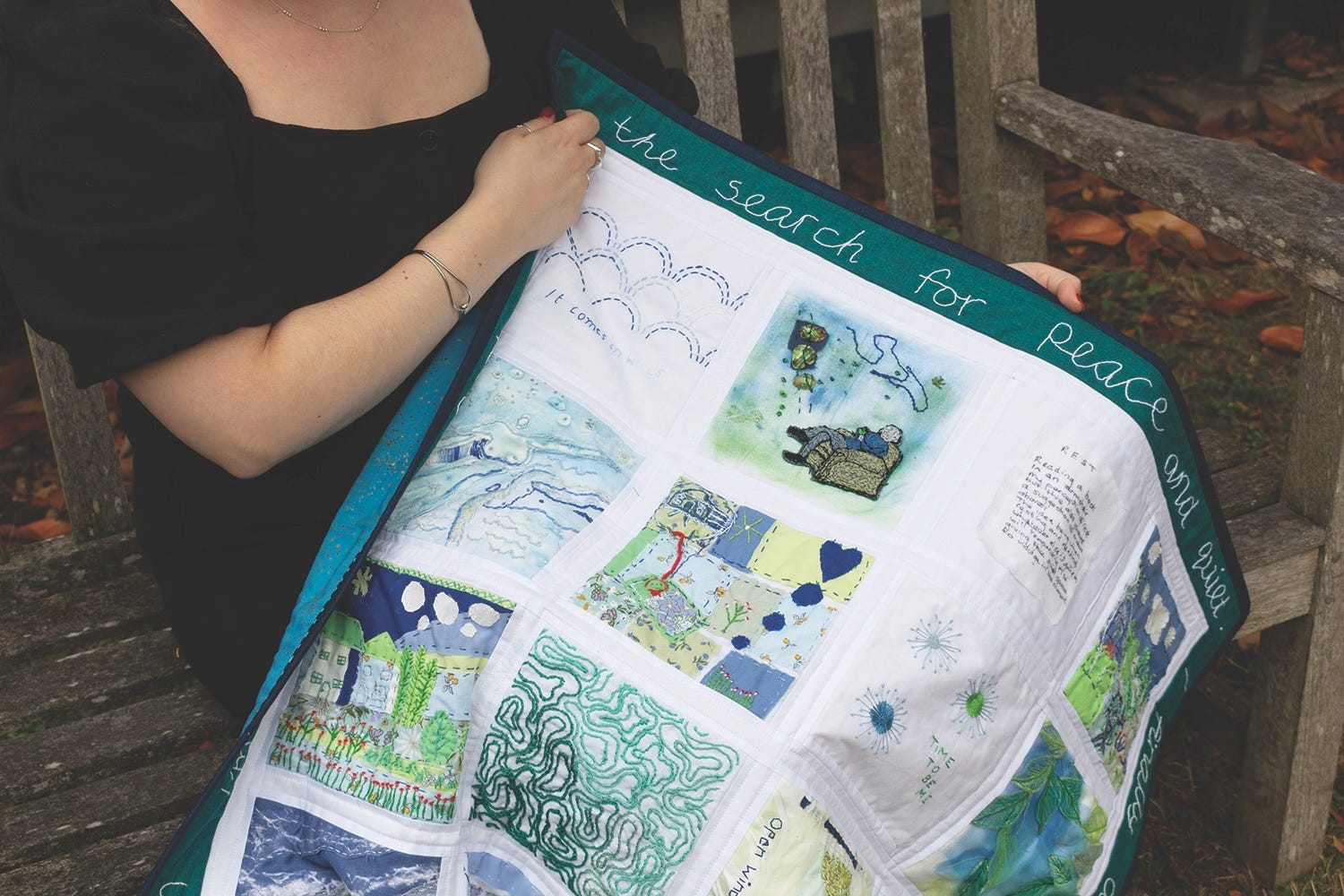
For a community project as part of The Sleepers, a quilt was chosen because it’s deeply connected to rest — not only physically, as something we sleep under, but, symbolically, as a historic medium of resistance. Quilts have long histories in feminist and activist practices, offering warmth and comfort while also telling stories of marginalised groups. In this context, the quilt reflects the exhibition’s focus on rest as something emotional and political. Giving everyone a small square to fill allowed to quilt to be polyvocal, in a low-pressure way.
How did conversations around rest and sleep shape the final design of the quilt?
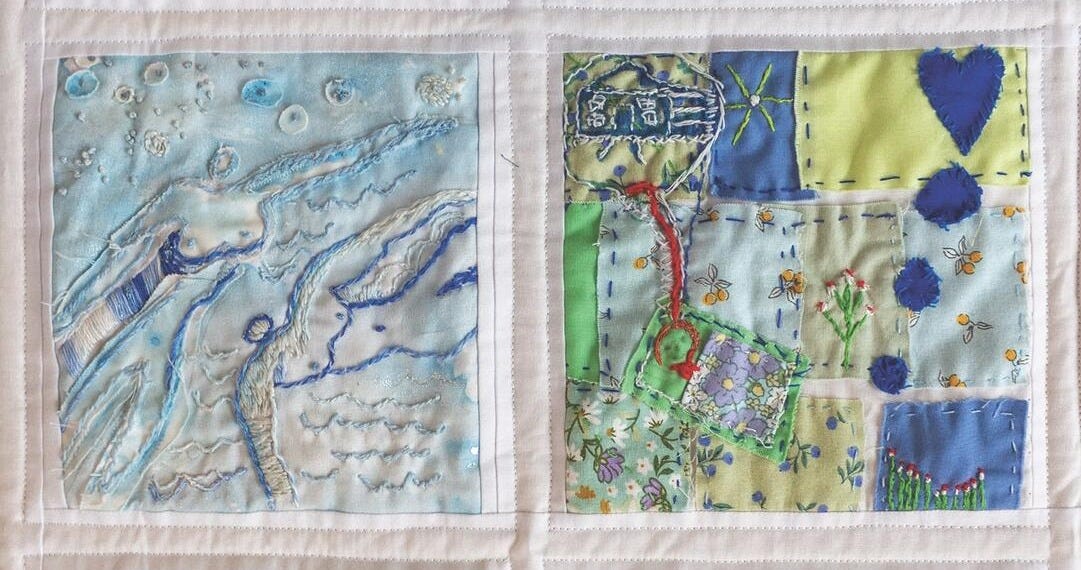
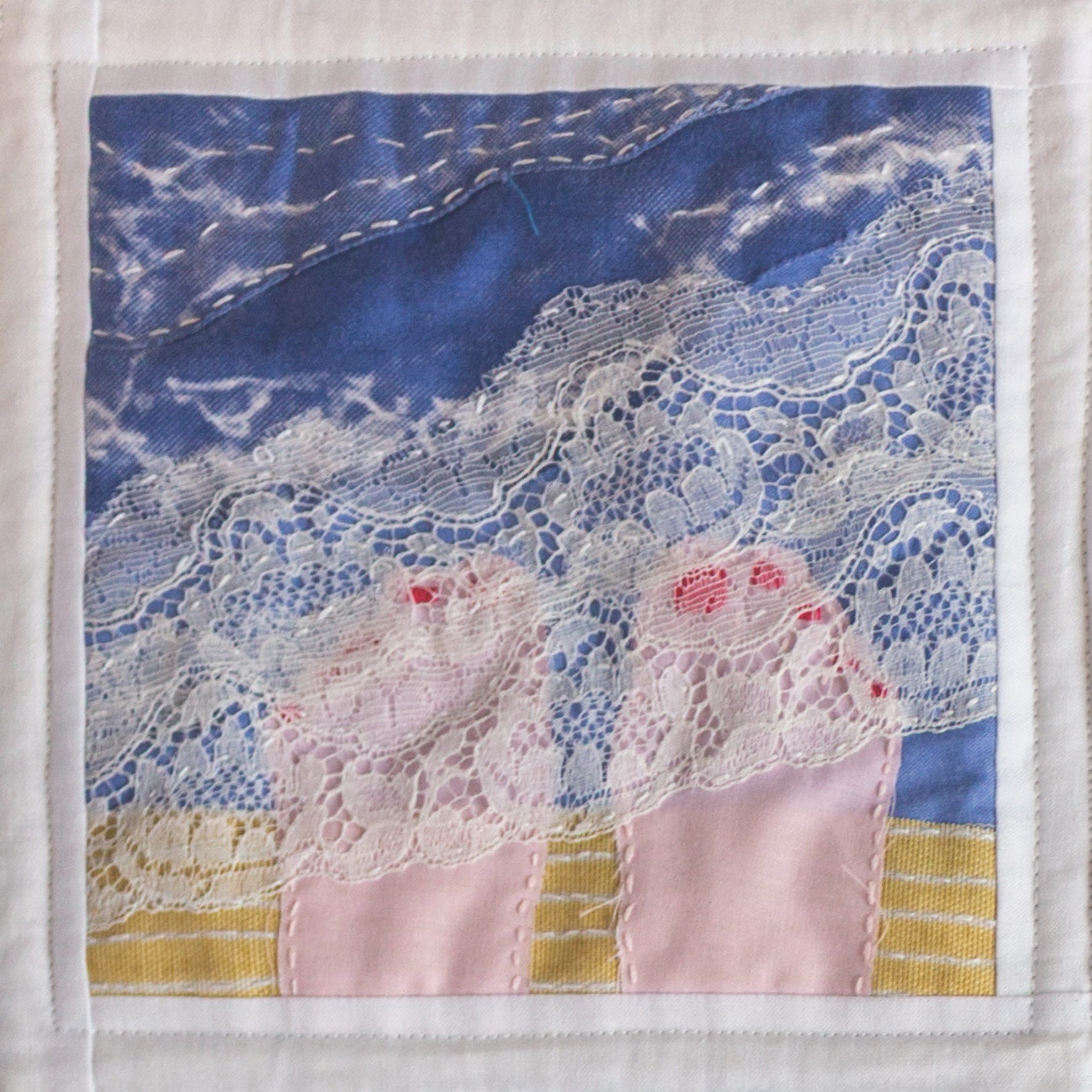
The quilt was created through a series of workshops with women from the Cambridge Women’s Resource Centre (CWRC). The CWRC has offered educational courses, creative group activities and individual support to the women of Cambridge for over 40 years. They can help women with a range of issues, including housing, education, finding work, health and wellbeing and much more. The workshops were very conversational and revealed deeply personal reflections like the guilt around doing nothing, the struggle to fall asleep with a racing mind, or the comfort of a cat or a cup of tea. These stories shaped each fabric square with colour, imagery and text chosen in response to lived experience. The quilt is essentially a collective portrait of how rest is felt, desired and sometimes resisted in our local community.
Can you tell us more about the collaboration with CWRC and how this influenced the direction of the exhibition?
The CWRC partnership grounded the project in real community experiences. It brought in voices that are often underrepresented in art spaces — women navigating poverty, disability, caregiving and recovery. Their participation shaped both the content and ethos of the exhibition. It made clear that rest is not a luxury everyone can access and crucially, it is something that everyone has a completely different relationship to. This collaboration also allowed the quilt to live beyond the gallery: it will return to the Centre after the show, remaining part of the community that helped create it.
What role does care play in this project, as both a theme and a craft practice?
Care runs through everything — from Gwen Raverat’s drawings of her sleeping family members to the way each patch of the quilt was sewn with intention. The act of quilting itself is a form of care: slow, tactile, collaborative. In both content and process, the exhibition asks how care shapes rest, how illness and exhaustion demand care and how creative practices can be sustained through it. Care is not just represented in the artworks — it’s how the exhibition was made.
What do you hope viewers take away from seeing the quilt in an exhibition space?
We hope people see rest not as something passive, but as something powerful — especially for those who are ill, caregiving or excluded from rest altogether. The quilt invites viewers to slow down and consider who gets to rest, who doesn’t and why. It’s also a celebration of communal making: how stories stitched into fabric can hold weight, meaning and solidarity. Ideally, it leaves people reflecting on their own relationship to rest — with more empathy and awareness.
The Sleepers will be on view 18 September 2025 – 22 February 2026 at Murray Edwards College, Cambridge. Curated by Laura Moseley with curatorial support from Harriet Loffler. This exhibition was generously supported by East Anglia Art Fund, Cambridge Arts Society and Backstitch Cambridge.
 decoratingdissidence.com